

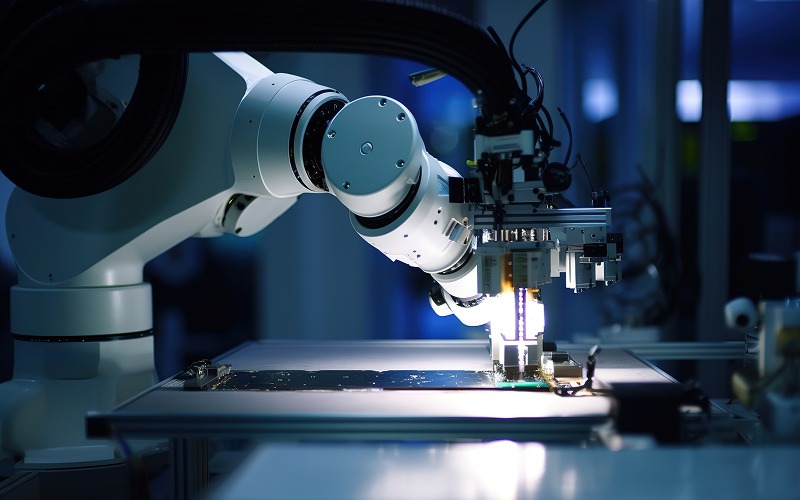
Manufacturing floors move at a blistering pace, and customer tolerances become tighter by the day. Whether you assemble delicate micro-electronics, seal electric vehicle battery trays, or package sterile pharmaceutical devices, the margin for error has virtually vanished. A microscopic air bubble, a messy string of adhesive, or a single fluctuating bead of resin can spoil an entire production batch, driving up scrap rates and frustrating factory floor managers. Upgrading your fluid handling equipment provides a direct route to higher throughput and repeatable accuracy. However, rushing into capital investments without scrutinising your production realities leads to expensive integration headaches. Modern fluid dispensing systems incorporate sophisticated robotics, sensitive pressure regulation, and precision nozzles, but they must align perfectly with your chemistry and cycle goals.
| Evaluation Area | Key Assessment Criteria | Production Impact |
| Fluid Rheology & Chemistry | Viscosity, shear-thinning behaviour, pot life, and abrasive filler content | Prevents line blockages, component abrasion, and premature material curing |
| Deposit Tolerances | Minimum shot volume, flow rate limits, and bead geometry | Dictates whether time-pressure, jetting, or positive displacement delivers repeatable yields |
| Wetted Material Compatibility | Fluid resistance of internal seals, manifolds, and fluid paths | Stops chemical corrosion, seal swelling, and fluid contamination |
| Line & Automation Integration | Communication protocols, robotic payload limits, and cycle speeds | Ensures seamless handshakes between the dispenser and existing workcell PLCs |
Chemical Deep Dive: Do Not Let Fluid Behaviour Catch You Out
Many engineers mistakenly evaluate fluids purely by their nominal viscosity rating on a raw material data sheet. In real-world factory environments, fluid behaviour changes dramatically under shear, pressure, and ambient workshop temperatures.
Thermal pastes packed with abrasive ceramics will rapidly grind down standard internal components, whilst cyanoacrylates cure instantly upon contacting ambient air moisture. Two-part epoxies demand rigorous ratio control before static mixing. When revamping fluid dispensing systems, obtain full rheological profiles of your adhesives or greases. Test how your materials shear-thin under operating pressures to guarantee the fluid feed lines, heating jackets, and pressure vessels maintain uniform flow characteristics without clogging or separating.
Factory Harmony: Ensuring Seamless Robotic and PLC Integration
Even the most advanced dispensing technology fails if it cannot communicate cleanly with your broader assembly architecture. Standalone benchtop units might work well for prototyping, but automated production runs require deep system integration.
Examine the communication protocols between the dispensing controller and your main line programmable logic controller (PLC). Can your automation platform monitor real-time pressure readouts, stroke sensors, and low-level fluid alerts? Does the dispensing head fit cleanly onto your six-axis robotic arm without exceeding payload limits or straining cable harnesses? Prioritise modular systems that offer digital industrial inputs and outputs so your technicians can log deposition data, trace serial numbers, and adjust operational parameters on the fly.
The Heart of the Action: Matching Fluid Properties to the Right Valve
The nozzle mechanism acts as the ultimate gatekeeper of your production yield. The wrong dispensing valve introduces inconsistent dot profiles, droplet stringing, and messy dripping that compromises part quality.
A low-viscosity solvent requires a fast-acting diaphragm or pinch mechanism, whereas thick thermal grease demands an auger screw or a progressive cavity positive displacement system. If your line demands micro-deposits at blazing cycle rates, a pneumatic or piezoelectric jetting dispensing valve will shoot drops on the fly without touching the substrate. Match the valve’s mechanical cut-off action directly to your fluid’s tackiness and surface tension to achieve crisp, clean cut-offs on every single cycle.
Downtime Economics: Evaluating Cleaning, Maintenance, and Consumables
Capital cost represents only the entry ticket to an equipment upgrade. The real financial impact reveals itself across months of daily clean-up routines, calibration checks, and preventative maintenance schedules.
If an operator must spend two hours disassembling a labyrinth of hoses, fluid manifolds, and needle tips at the end of every work shift, your overall equipment effectiveness (OEE) plummets. Look for modular dispensing designs with disposable wetted parts or rapid-release fluid channels. Fast-purge functions and tool-free maintenance reduce changeover intervals from hours to minutes, keeping your assembly lines humming and your operators focused on value-added tasks.
Engineer Repeatability to Protect Your Bottom Line
Upgrading your fluid handling setup should eliminate production bottlenecks, not introduce fresh headaches. By thoroughly analysing fluid rheology, pairing your material with the ideal nozzle technology, and verifying robotic connectivity, you establish a resilient foundation for long-term manufacturing success. Take the time to audit your workshop parameters today, consult experienced application engineers, and build a precision dispensing process that boosts yields across every shift.
Frequently Asked Questions
How do I choose between time-pressure dispensing and positive displacement systems?
Time-pressure systems provide an economical solution for stable, low-to-medium viscosity fluids. However, if your fluid changes viscosity over time or contains high solid filler content, positive displacement pumps deliver superior volumetric repeatability regardless of material changes.
Why does my fluid string or drool after an upgrade?
Drooling typically indicates trapped air compressibility inside the fluid line, incorrect fluid retraction settings, or an incompatible valve mechanism that fails to create a crisp mechanical cut-off at the nozzle tip.
Can modern dispensing systems handle abrasive thermal interface materials?
Yes, but you must select systems featuring hardened carbide, ceramic, or diamond-like carbon (DLC) wetted components to prevent abrasive filler particles from eroding internal metering chambers.
Contact Unicontrols today, and let our engineering experts tailor the ultimate dispensing solution for your automated lines!


